Group creation and continuity
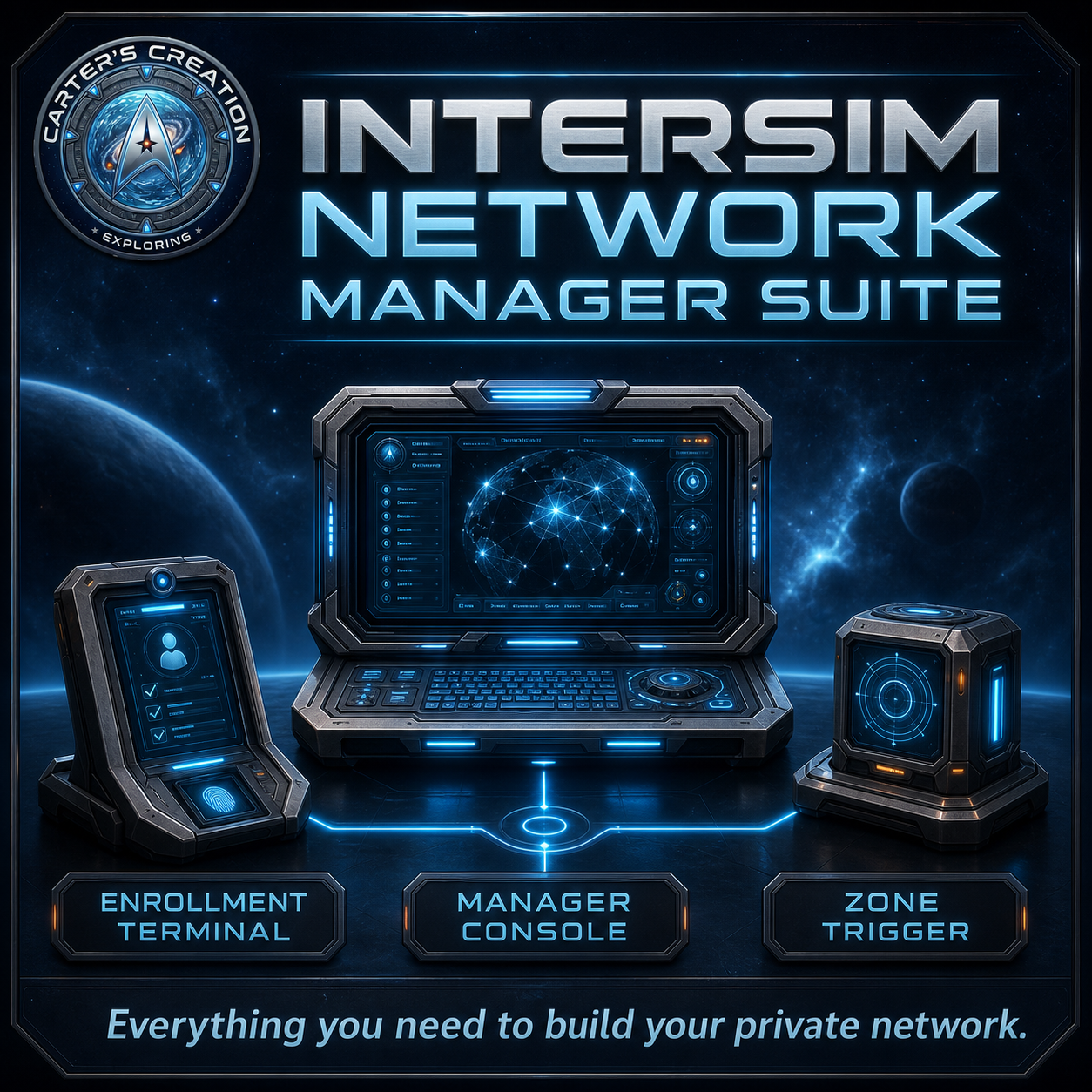
Create an isolated Intersim group and retain its channels, members, profiles and devices when the physical console is replaced.
- Create a new private network
- Recover groups owned by the current manager
- Transfer ownership to another licensed manager
- Preserve the network when objects are re-rezzed
What it brings: the group belongs to its authorized leadership—not to one fragile in-world object.
Member admission and onboarding
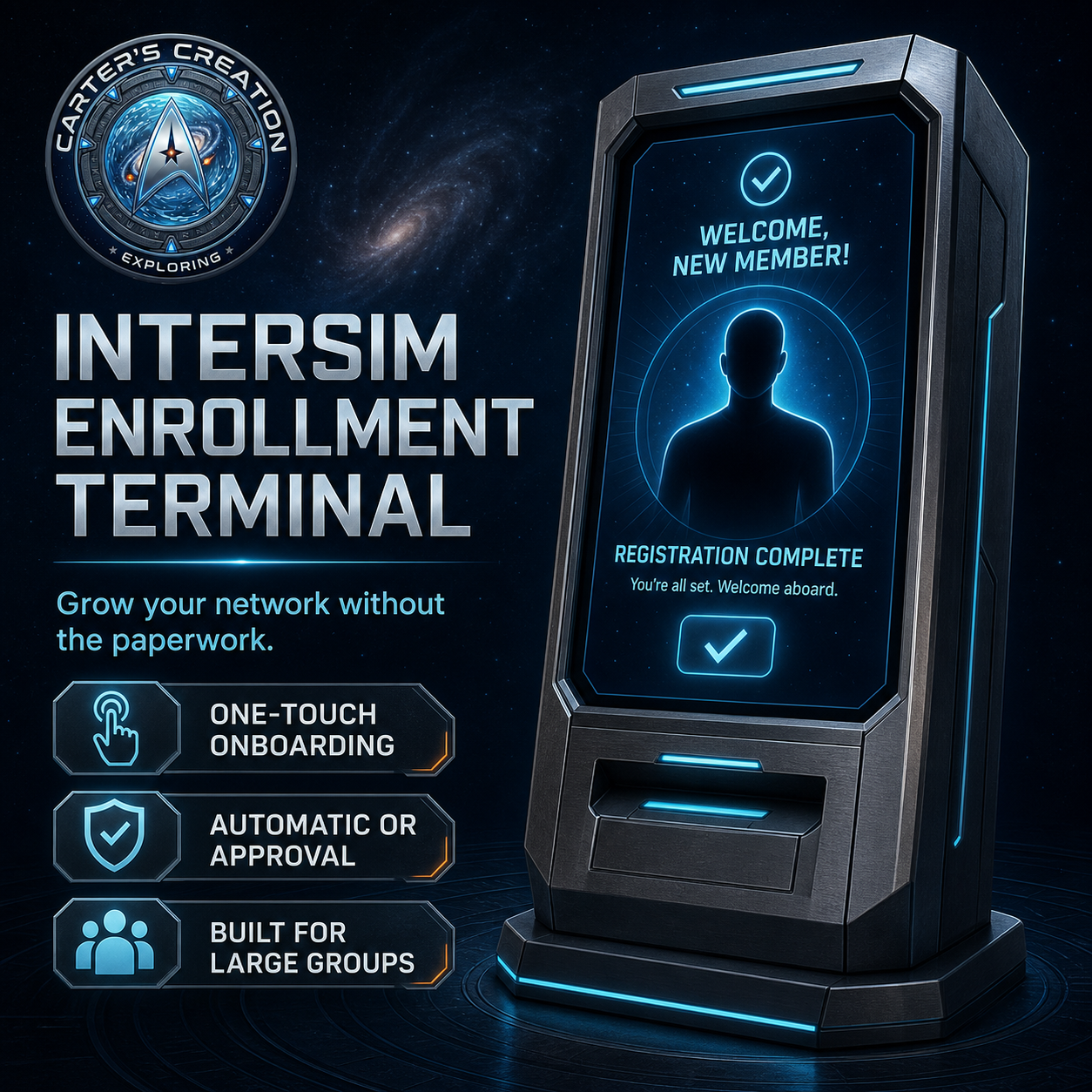
Choose how new members enter and combine automatic enrollment with manager approval whenever tighter control is required.
- Closed, UUID, key or mixed admission modes
- One-time or reusable admission keys
- Automatic or approval-based Enrollment Terminals
- Optional Second Life group-tag validation
What it brings: small groups keep precise control while large groups can onboard members quickly.
Members, managers and bans
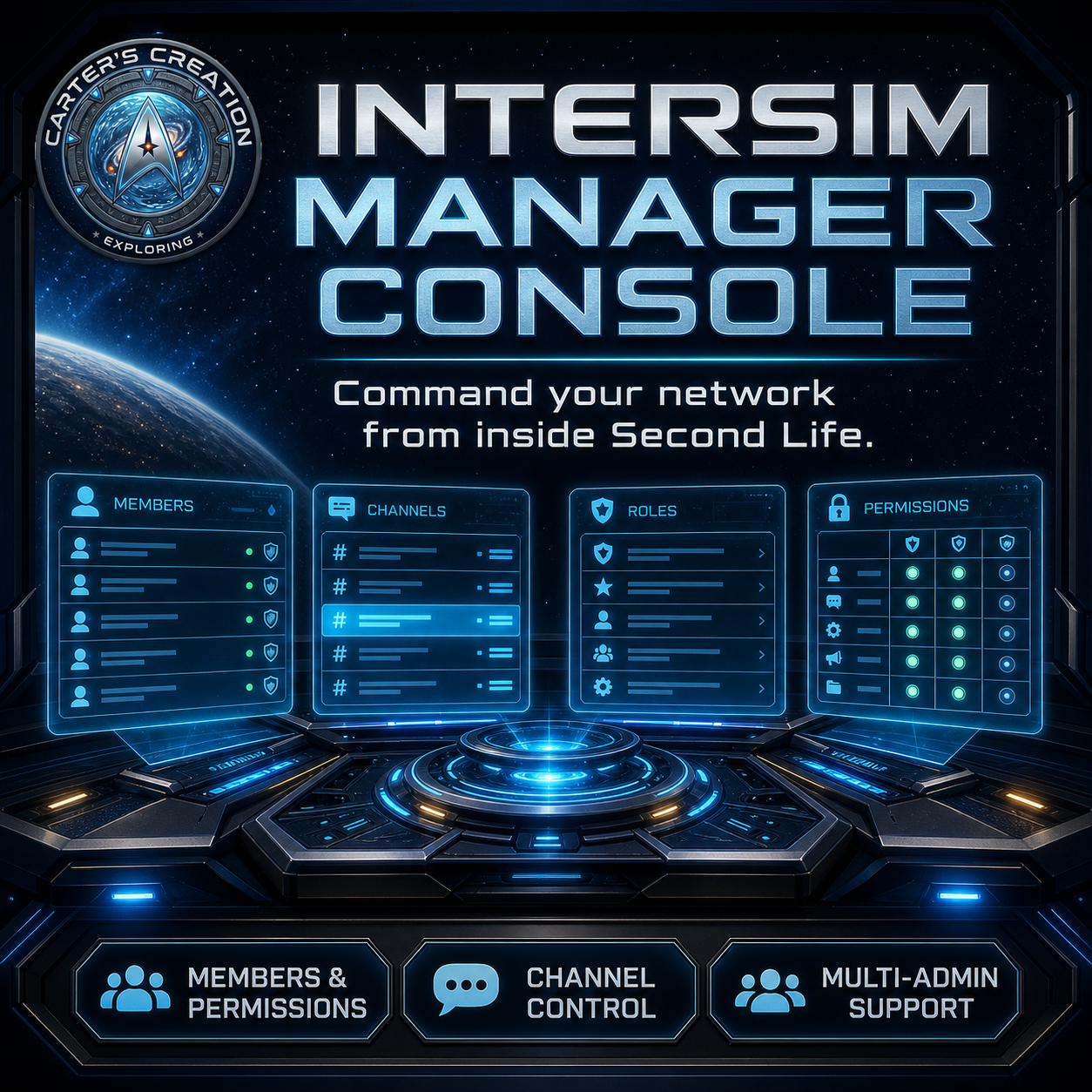
Find members by name or UUID, review their status and take the appropriate action without editing the database or opening a website.
- Search and paginated member selection
- Remove, ban or restore members
- Assign multiple managers and specific permissions
- Prevent blocked avatars from reconnecting
What it brings: responsibility can be shared without giving every manager unrestricted control.
Channels and announcement governance
Build channels for ships, departments, missions or fleet-wide operations and define exactly who may receive, transmit or start logs.
- Create, describe and organize group channels
- Grant receive, transmit and log permissions
- Protect the reserved FLEET WIDE announcement channel
- Authorize selected members to broadcast announcements
What it brings: members hear the right traffic while sensitive or high-visibility channels remain controlled.
Location-aware automation
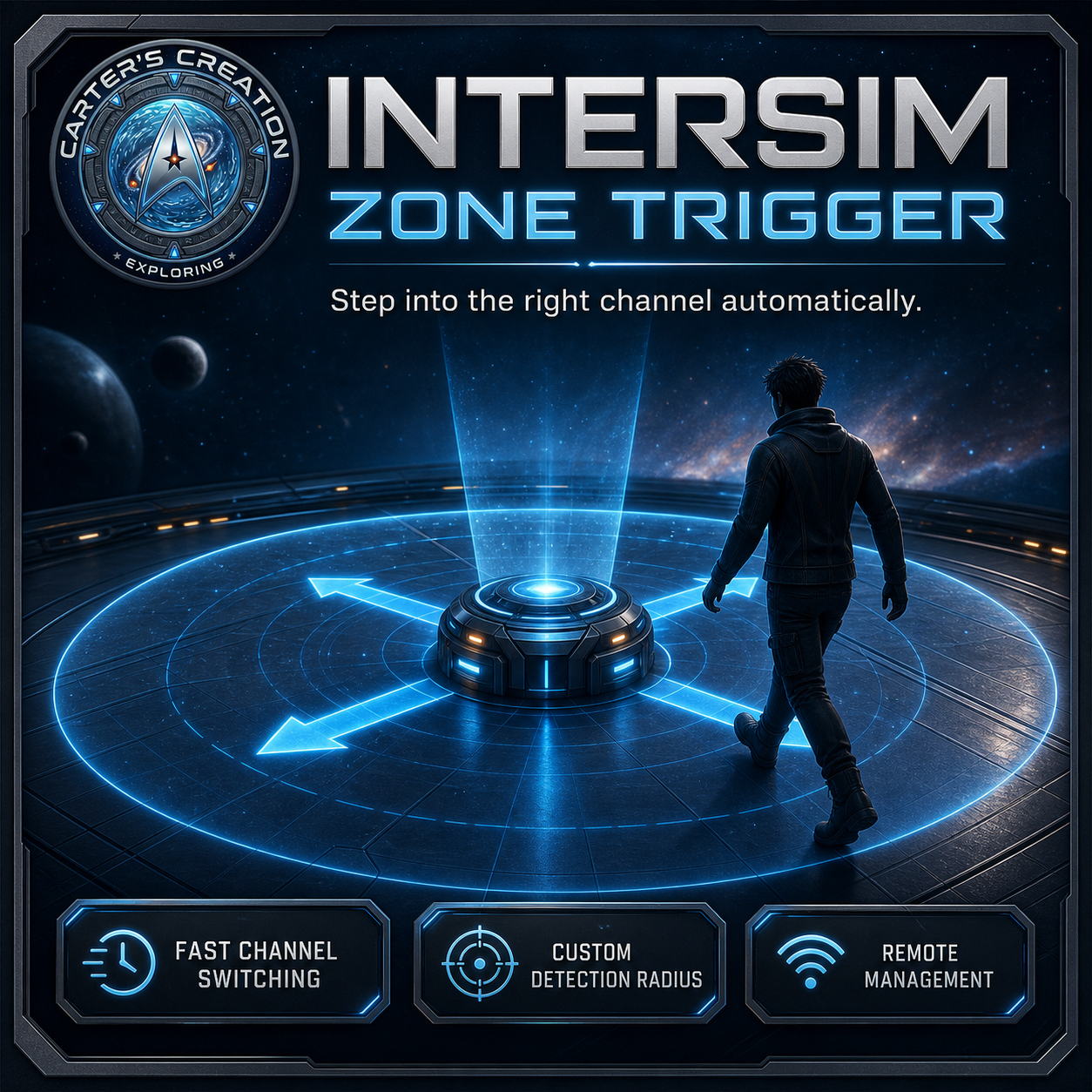
Connect locations to channels with Zone Triggers and configure them from any Manager Console authorized for the same group.
- Select the target channel and detection radius
- Choose automatic or confirmation behavior
- Set entry, exit and temporary-lock rules
- Review trigger status and activation history
What it brings: a bridge, engineering bay or mission area can automatically place members on its operational channel.
Profile and identity governance
Provide official role-play choices while deciding which fields members may edit and which values management must control.
- Branch, ship, rank, position and species catalogs
- Official colors for custom branches
- Member-editable policies by profile field
- Manager overrides and individual field locks
What it brings: members keep useful flexibility without losing organizational consistency.
Event logging and retention
Allow only trusted roles to record a channel, then control how long completed logs remain available.
- Separate permission to start or stop logs
- Channel-specific capture with starter and stopper records
- Configurable group retention period
- Temporary viewing and download access after processing
What it brings: command events and role-play sessions can be reviewed without turning every conversation into a permanent record.
Group media and product behavior
Provide a unified audiovisual identity for group Communicators and decide whether individual members may override it.
- Group power-on and power-off sounds
- Group ON, OFF and private-call textures
- Manager-enforced or member-customizable media
- Immediate update requests to connected Communicators
What it brings: a fleet can present one consistent identity while still allowing personal choice when leadership permits it.